News Archive
 Progress in precipitation science and applications is critical to advancing weather and water budget studies and to predicting natural hazards caused by extreme events, from local to global scales. It requires more than just one deterministic precipitation "best estimate" to adequately cope with the intermittent, highly skewed distribution that characterizes precipitation. Probabilistic Quantitative Precipitation Estimation (PQPE) is an approach that integrates remote sensing, meteorology, hydrology, and artificial intelligence to advance precipitation estimation, processes understanding, and applications. It increases the information content through the consideration of uncertainty in the remote sensing of precipitation and advances the quantification of risk associated with precipitation-related hazards such as flash flooding. The approach described in Kirstetter et al. (WRR, 2015) was tested for radar networks by NOAA/NSSL scientists and NWS forecasters in the HMT-Hydro Experiment in 2019 to evaluate new tools and techniques through real-time testbed operations for the improvement of flash flood detection and warning operations link. Through collaboration with the NOAA Multi-Radar/Multi-Sensor team, it is now running in real-time in the MRMS System Experimental Product Viewer at link. NASA and NOAA support the current development of PQPE for the latest generation of global satellite precipitation estimates. More details can be found at link.

An OU international student has launched a space exploration organization at OU in partnership with NASA. Click here to read more.

Dr. Bodine unravels the mysteries of tornadoes using next-generation radars and computer simulations.
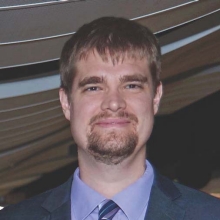 ECE/ARRC assistant professor Dr. Justin Metcalf has received a Young Faculty Award from the Defense Advanced Research Projects Agency (DARPA), an agency of the U.S. Department of Defense. Click here for more information.
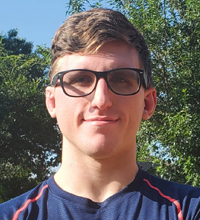
Shane Flandermeyer (ECE/ARRC) was selected for special recognition at the recently held AFRL Beyond 5G Software Defined Radio University Challenge Showcase. AFRL issued the challenge to explore and develop software-defined radios coupled with software-defined networking technologies to enable autonomous distributed sensor and communication systems. Nine teams from across the country were selected to participate. Shane, who will be a junior this fall, was the only individual on the OU SDR team. He competed against teams made up of multiple graduate and undergraduate students.Shane received a $1000 award for his performance and was commended by the judges for his excellent video demonstration. Shane is advised by Dr. Justin Metcalf.

The research at OU's Advanced Radar Research Center touches almost everything in our modern life - cell phones, weather, military systems and more. Learn more from Dr. Ruyle about ARRC's mission to solve some of the top problems facing our society today.

Congratulations to SoM/ARRC Master’s student Morgan Schneider on being selected the recipient of a National Science Foundation Graduate Research Fellowship. As the country’s oldest fellowship program of its kind, the Graduate Research Fellowship Program recognizes and directly supports outstanding graduate students in NSF-supported science, technology, engineering, and mathematics disciplines. Fellows share in the prestige and opportunities of being selected, including a three-year annual stipend, opportunities for international research and professional development, and the freedom to conduct their own research at any accredited U.S. institution. They are crucial to maintaining and advancing the nation's technological infrastructure and national security, as well as contributing to the economic well-being of society at large. Morgan is advised by Dr. David Bodine.
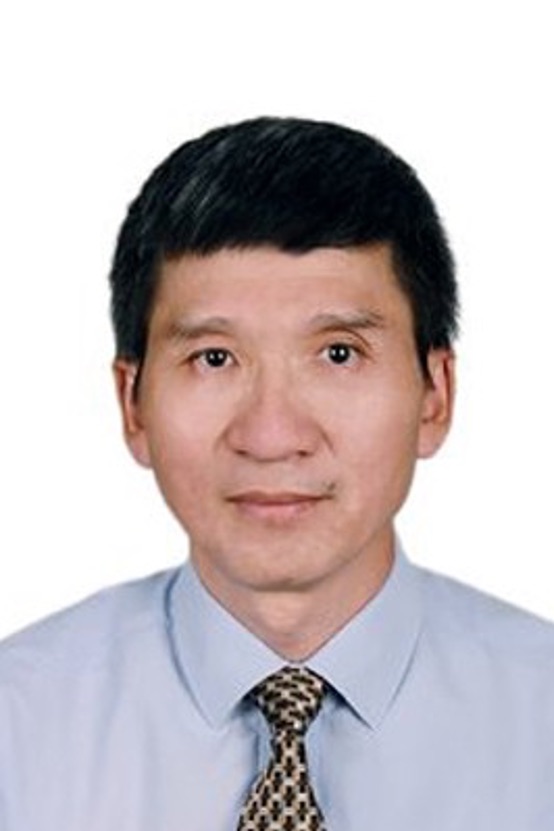
ARRC/SoM professor Dr. Guifu Zhang has received the School of Meteorology, College of Atmospheric and Geographic Sciences, Sam K. Viersen Family Foundation Presidential Professorship. OU’s Presidential Professorships recognize faculty members who excel in all their professional activities and exemplify to their students and colleagues the ideals of a scholar through their endeavors in teaching, research and creative scholarly activity, professional and university service, and public outreach. Dr. Zhang’s primary research focus is radar polarimetry and interferometry for weather quantification and forecasting. His colleagues agree that he is a rare breed of theoretical and experimental researcher alike. He has ingenious inspiration when it comes to the design of novel hardware, the implementation of new calibration techniques and the development of new inversion algorithms for these observation systems. This approach has led to the development of unique, innovative cylindrical polarimetric phased array radar theories and technologies that have been granted U.S. patents. A prototype system of the cylindrical radar has been built, and such a system has the potential to become the core design of the next-generation operational weather radar network of the United States. Congratulations on your achievement Guifu!
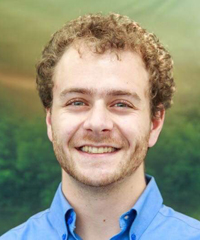
Congratulations to SoM/ARRC graduate student Noah Brauer for receiving the School of Meteorology Outstanding Teaching Assistant Award. Candidates were nominated by faculty, staff and students, and selected by the Meteorology Student Awards Committee. Noah has been a graduate teaching assistant for Synoptic Meteorology (Fall 2017-2019), Mesoscale Meteorology (Spring 2018), Cloud Physics (Spring 2020), as well as an instructor for Severe and Unusual Weather (Spring 2019), and Introduction to Meteorology II Laboratory (Summer 2018).
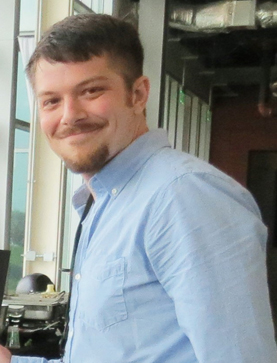
Graduate student Andrew Byrd (ECE/ARRC) was named the recipient of the Tommy C. Craighead Award for Best Paper in Radar Meteorology. The $500 award is presented by the School of Meteorology to an OU student who is the lead author on a refereed journal article with a focus on radar studies of the atmosphere. Andrew’s paper, “Development of a Low-Cost Multistatic Passive Weather Radar Network”, was selected for its superior quality of research exemplifying the inter-disciplinary nature of remote sensing of the atmosphere using radar. Andrew’s paper is being published in the April 2020 issue of IEEE Transactions on Geoscience and Remote Sensing. Congratulations Andrew!